/// Return [Research project on documenting contemporary art projects], Interview with 26 Iranian contemporary artists
Editor: Foad Alijani Publication information: Tehran, Paadmaan projects, 2022 Number of pages: 372 Cover design: Amir Moqtada Layout and printing: Royangaran Design Studio 1nd edition: Winter 2022, Tehran
———–
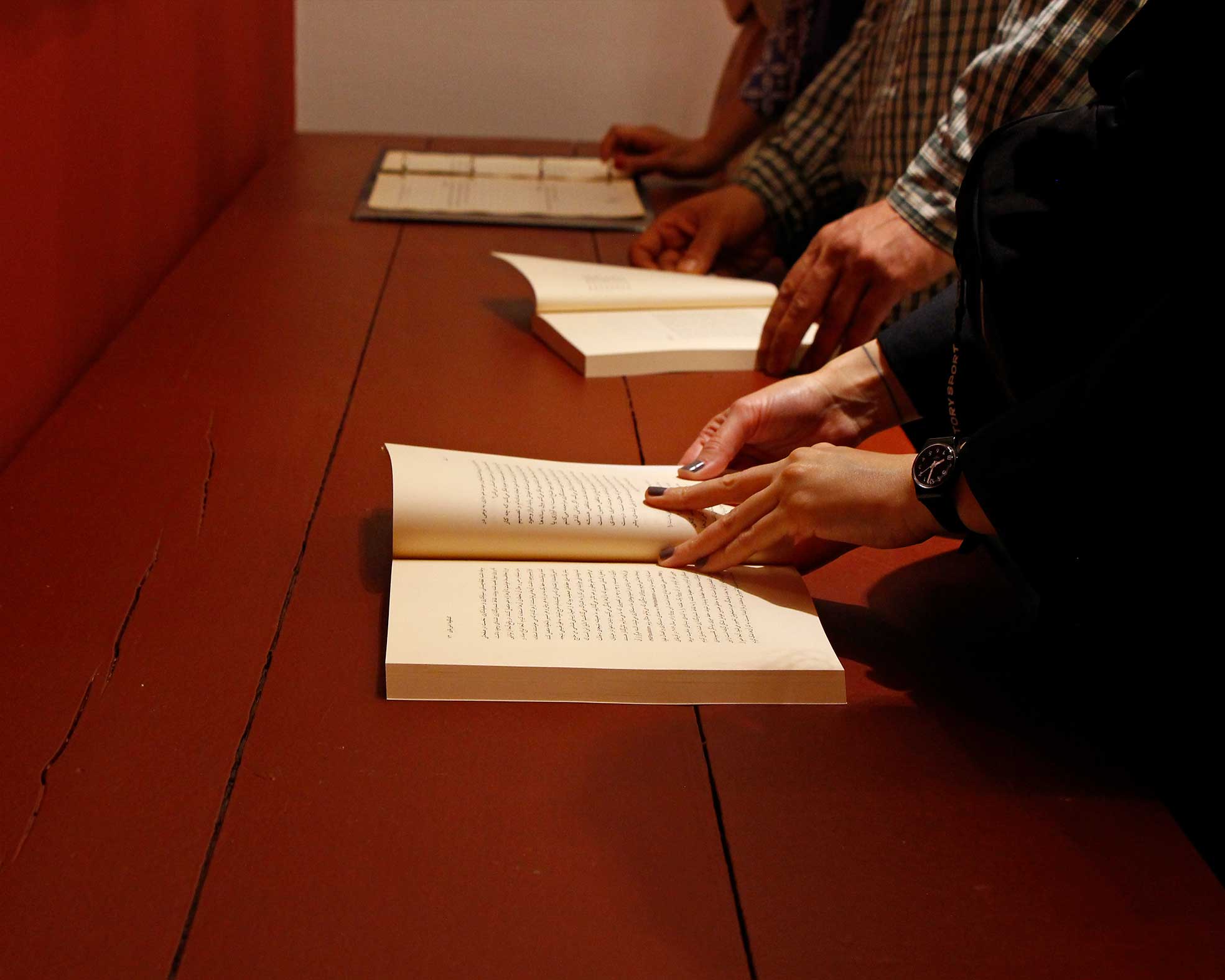
In contemporary art, we often encounter time-based and site-specific projects that are inherently temporal, and their raw materials possess these temporal qualities. The challenge arises in how artists can sustain their projects after their initial presentation. Should projects rooted in a specific time and space, and inherently temporary, be documented? This question leads us into the realm of conservation and preservation, which often manifests as ‘representation’ when it comes to documentation and presentation.
I initiated the Return project in 2016 as part of Paadmaan projects to explore these questions. The nature of contemporary art prompts artists with similar approaches to engage in diverse and complex experiences. These complexities create a nuanced relationship with documentation itself. Rather than pursuing research that yields static outcomes, I opted to investigate documenting contemporary art through conversations with Iranian artists, analyzing their methodologies and approaches toward documentation issues.
Documenting a project allows its archival use for various purposes such as introducing it to audiences who missed its initial presentation, and for research, among others. Research-based and archival exhibitions are crucial in revisiting these documents. Consequently, the book Return is accompanied by an exhibition to translate the concepts discussed in these conversations into practice. One focus is on the role of these documents in new contexts within exhibitions. Exploring artists’ websites and other digital media where they present data about their projects offers an accessible means to learn about their work.
Therefore, in the Return exhibition as a curatorial endeavor, the emphasis goes beyond merely introducing projects; it also considers the emotional journey each project has undergone in its displacement.
All rights reserved. No part of this book may be reproduced in any form without the prior written permission of the publisher and the copyright owner.
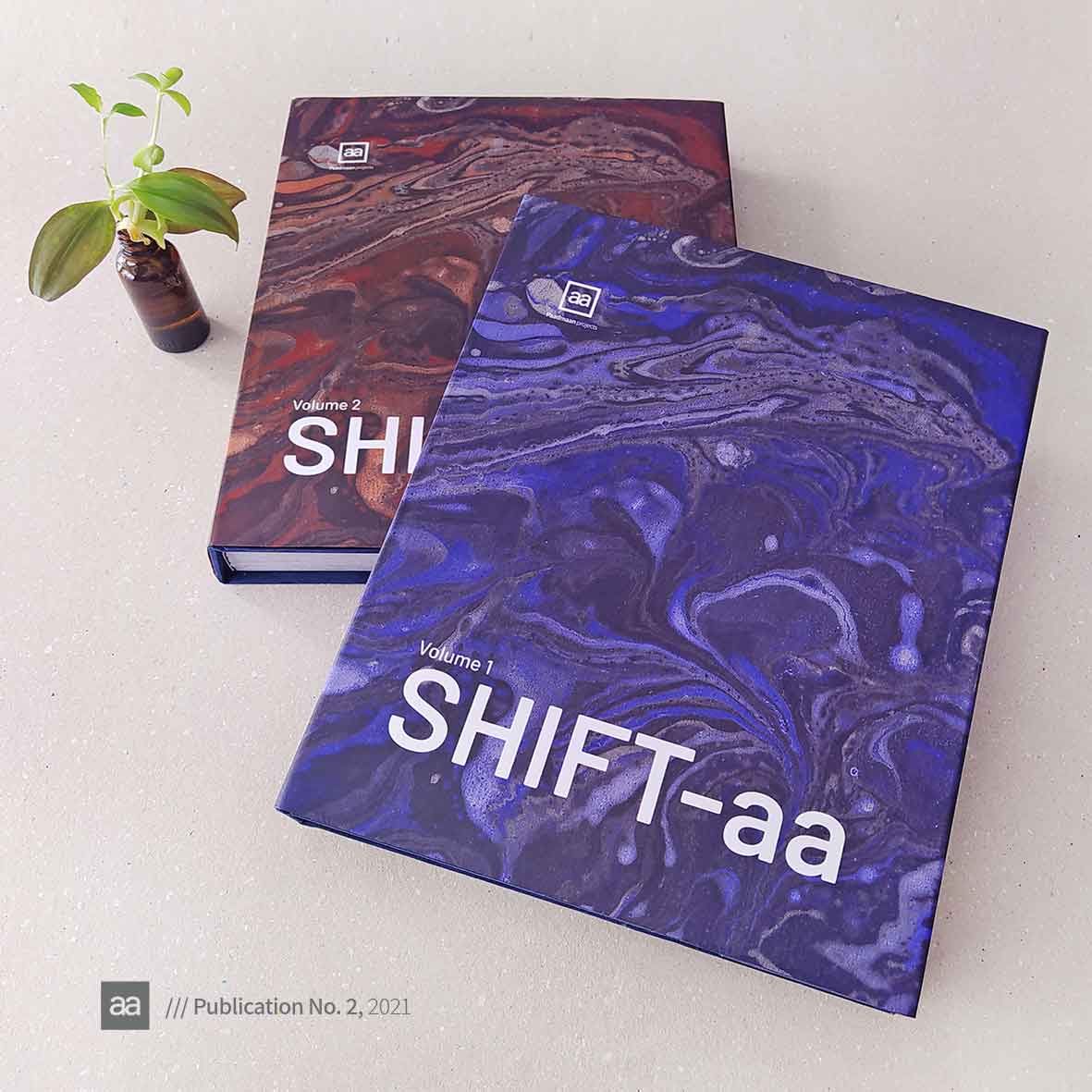
SHIFT-aa (Volume 1) & (Volume 2) was created and produced by Paadmaan projects, contemporary art platform based in Tehran Publisher: Paadmaan projects
Number of pages: 40 (Volume 1) Number of pages: 38 (Volume 2) Graphic design: Royanegaran Design Studio First published in 2021
Printed in Tehran, Iran by Royanegaran Design Studio
Publication No.2, 2022
///SHIFT-aais a presentation/research-based project that addresses shapeshifting and variation in the works of 14 selected Iranian painters, published in two volumes.
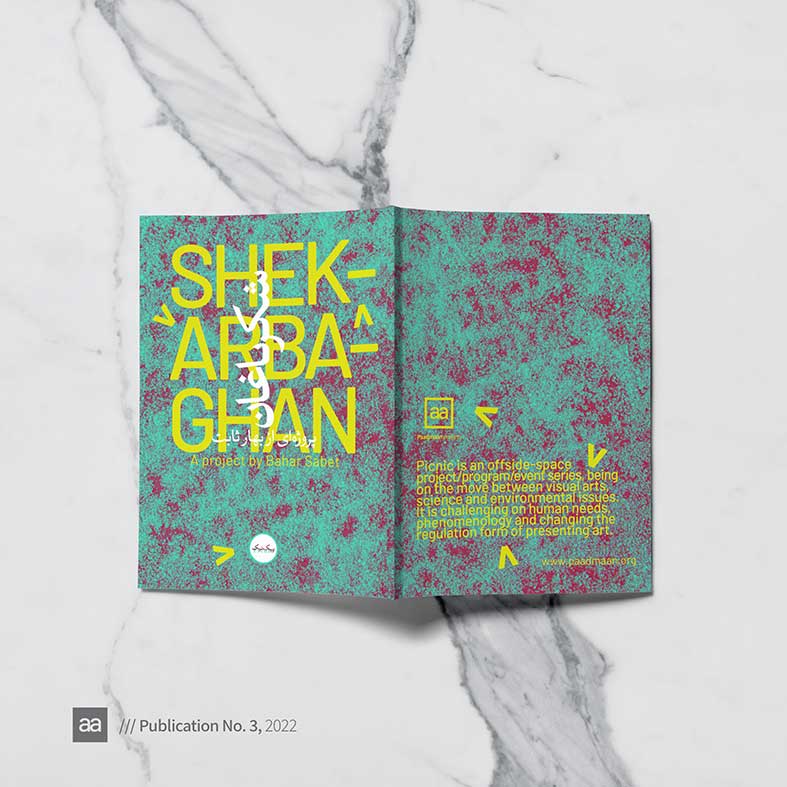
/// Shekarbaghan is a process-based project by Bahar Sabet with an autonomous and interdisciplinary approach, currently being implemented in one of the regions of Gilan province. In this project, Bahar emphasizes the journey and its concepts rather than focusing solely on the final output. This marks the second edition of the Picnic project.
From/To Earth On the Shekarbaghan project by Bahar Sabet
The term ‘earth’ evokes a wide range of issues and concepts, from those related to creation to living conditions in everyday life, and connections to one’s city, neighborhood, and home. The anatomy of human life is, from one perspective, a cyclical process of change and repetition over time. Nature itself encompasses the broad spectrum of physical phenomena in the world. Generally, humans consider themselves as part of nature. Therefore, when artists embark on projects exploring these themes, they are essentially journeying from the personal to the universal. In various respects, the Shekarbaghan project is situated along this path.
Central to the project is the artist’s decision to create a phenomenon using a plant-based and edible raw material, placed within a garden or forest, where it undergoes transformation and eventually dissipates due to environmental conditions and factors over time. Sugar serves as the primary material, chosen for its relevance to the region abundant with sugarcane fields, known as Shekarbaghan (Sugar Garden). Importantly, the artist emphasizes avoiding the transformation of the project’s raw material into an aesthetic object. Instead, it retains its original state and form, visually evolving in response to environmental influences along its temporal trajectory. This material, born from the earth and processed, returns to the earth naturally, contributing nutrition to insects in its cycle.
Through intervening in this process, the artist demonstrates how human intervention can alter the essence of natural cycles. This exploration raises questions about the ways humans influence the formation of diverse phenomena through their interventions.
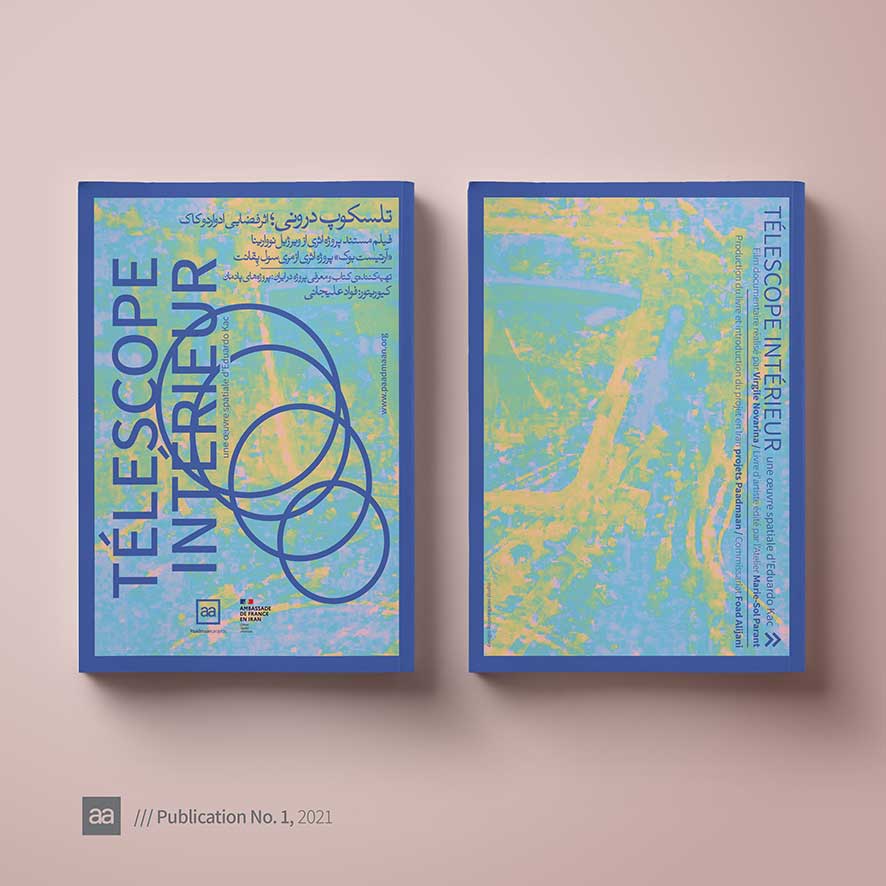
/// Inner Telescope, a space work by Eduardo Kac Documentary film directed by Virgile Novarina Produced by Observatoire de l’Espace du CNES Artist’s book made by Atelier Marie-Sol Parant
Production of the book and introduction of the project in Iran: Paadmaan projects. With support of French Embassy in Tehran Editor: Foad Alijani Translator (French): Babak Ershadi Publication information: Tehran, Paadmaan projects, 2019 Number of pages: 64 Graphic design and printing: Royanegaran Design Studio 2nd edition: Winter 2021 Thanks to Joris Bossard, communications manager of the film.
The articles published in this book have been given to Paademaan projects by Eduardo Kac’s studio.
………
Table of contents
– Introduction / Foad Alijani – Inner Telescope (A poem by Eduardo Kac designed for weightlessness and made in space) / Eduardo Kac – Why a poem in space? / Hugues Marchal – What space between creation and its documentation? / Golnaz Behrouznia – Interview with Eduardo Kac / Golnaz Behrouznia – Report of an interview with Marie-Sol Parant about her contribution to the Inner Telescope project by Eduardo Kac / Amin Shojaei
Eduardo Kac has created an artwork aboard the International Space Station (ISS); French astronaut Thomas Pesquet realized it on Saturday, February 18th, 2017. Kac’s work, entitled Inner Telescope, was specifically conceived for zero gravity and was not brought from Earth: it was made in space by Pesquet following the artist’s instructions. The artwork was made from materials already available in the space station. It consists of a form that has neither top nor bottom, nor front or back. Viewed from a certain angle, it reveals the French word “MOI“ [meaning “me”, or “myself”]; from another point of view one sees a human figure with its umbilical cord cut. This “MOI“ stands for the collective self, evoking humanity, and the umbilical cord cut represents our liberation from gravitational limits. Inner Telescope is an instrument of observation and poetic reflection, which leads us to rethink our relationship with the world and our position in the Universe. Since the 1980s, Eduardo Kac has been theorizing and producing art and poetry that challenge the limits of gravity. His Space Poetry manifesto was published in 2007. Now, in 2017, Kac finally realizes the dream he has pursued for more than 30 years: the creation, production and experience of a work directly in outer space. The astronaut’s mission is entitled “Proxima” and is coordinated by the European Space Agency (ESA). Kac’s project is coordinated by the L’Observatoire de l’Espace, the cultural lab of the French Space Agency. >>